O'Maro Bekele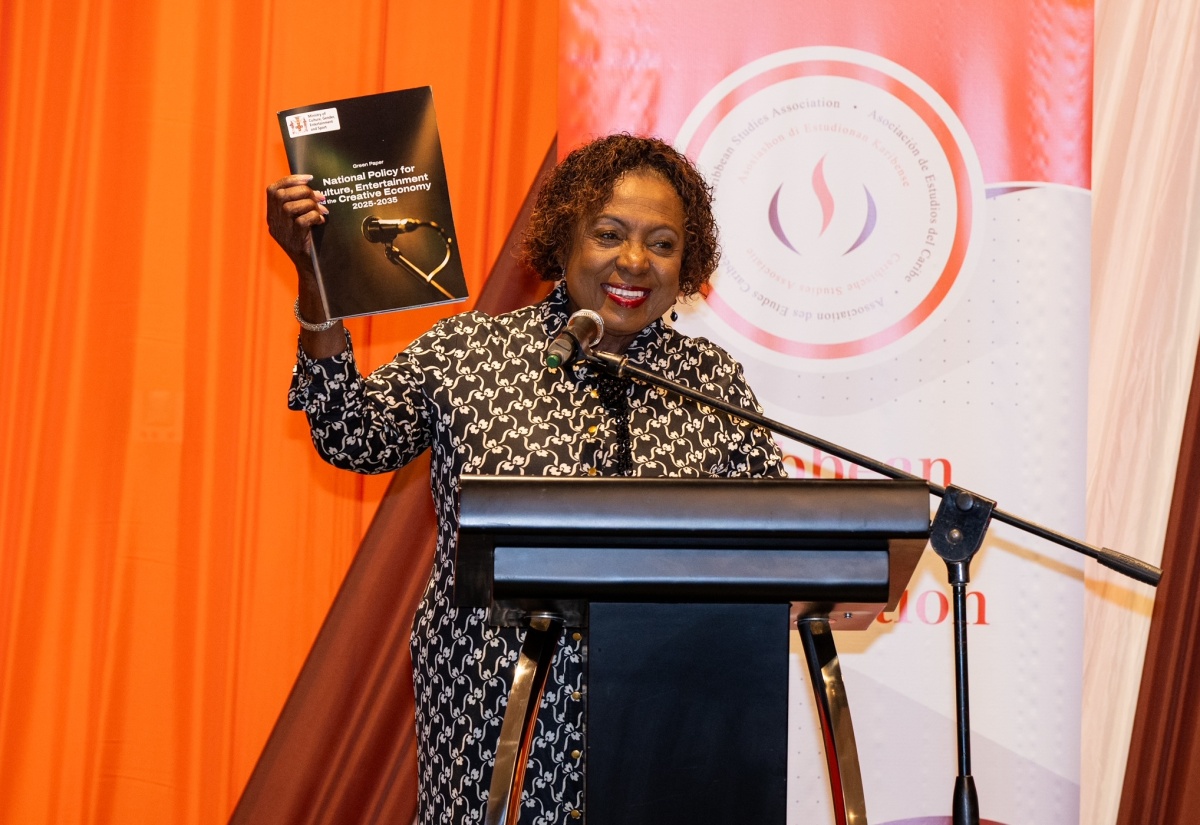
Why Jamaica’s New Creative Economy Policy Matters
For years, Jamaican creatives have been told that culture is one of our greatest assets.
Politicians have said it.
Business leaders have said it.
Tourism campaigns have said it.
The world has certainly said it.
Reggae, dancehall, athletics, language, food, fashion and storytelling have carried the Jamaican flag into almost every corner of the globe. Jamaica’s cultural influence extends far beyond what might be expected from a nation of fewer than three million people.
Yet for many of the people responsible for creating that influence, the reality has often been very different.
Artists struggle to earn a living wage.
Theatre practitioners operate with limited infrastructure.
Festivals compete for scarce resources.
Creative entrepreneurs face barriers to funding.

Cultural practitioners preserve traditions with little institutional support.
Many creatives work within an economy that celebrates their output while often undervaluing their labour.
The proposed National Policy for Culture, Entertainment and the Creative Economy 2025-2035 represents an attempt to address this contradiction.
At its heart, the policy asks a simple but important question:
What if culture is not merely something Jamaica possesses?
What if culture is something Jamaica can strategically develop?
This distinction is critical.
Historically, culture has often been viewed through the lens of heritage preservation. The focus has been on protecting traditions, safeguarding history and promoting national identity. These remain essential priorities and continue to form a significant part of the policy framework.
However, the new policy goes further.
It proposes that culture, entertainment and creativity should also be understood as economic assets capable of generating employment, exports, innovation and wealth.
This represents a significant evolution in national thinking.
Rather than viewing culture as separate from economic development, the policy positions the creative economy as a contributor to economic growth and national prosperity.
In practical terms, this means recognising musicians, filmmakers, writers, designers, performers, digital creators, festival producers, cultural entrepreneurs and creative innovators as participants in a productive sector of the economy.
The implications are far reaching.
When a sector is formally recognised as an economic contributor, questions begin to change.
Instead of asking whether culture is important, policymakers begin asking how much value it creates.
Instead of asking whether artists deserve support, governments begin asking what systems are required to maximise economic output.
Instead of viewing festivals solely as entertainment, attention shifts toward tourism impact, job creation, local spending and investment opportunities.
This is where the policy becomes particularly significant.
The document repeatedly identifies the need for stronger governance, better data collection, increased investment, improved intellectual property protection and expanded infrastructure.
These may sound like technical issues, but they address challenges that have affected the sector for decades.
How can investment be attracted if there is insufficient data?
How can creatives build sustainable careers if intellectual property rights are weakly enforced?
How can communities fully participate if cultural infrastructure is concentrated in limited spaces?
How can Jamaica compete globally if its creative industries remain fragmented and largely informal?
The policy attempts to answer these questions through a coordinated national framework.
Importantly, the document also recognises that culture serves purposes beyond economics.
Culture shapes identity.
Culture strengthens communities.
Culture preserves memory.
Culture transmits values across generations.
Culture helps people understand who they are and where they belong.
The policy therefore seeks to balance two important realities.
The first is that culture has intrinsic value.
The second is that culture has economic value.
Jamaica’s future success may depend on our ability to embrace both.
The challenge ahead is implementation.
Policies do not create change on their own.
Change requires institutions, partnerships, investment, accountability and public participation.
The release of this Green Paper begins a national conversation.
The question now is whether Jamaica is prepared to make the investments necessary to transform cultural potential into measurable national development.
If successful, this policy could become one of the most important cultural and economic frameworks introduced in Jamaica in the last generation.
The opportunity is not simply to preserve Jamaican culture.
The opportunity is to build an economy around it.
That is a conversation worth having.