O'Maro Bekele
What does it mean to be Caribbean?
The answer has never been simple.
The Caribbean is one of the most culturally diverse regions in the world. Its people descend from Indigenous communities, Africans, Europeans, Indians, Chinese, Syrians, Lebanese and many others who arrived through migration, trade, colonisation and displacement.
Yet despite this diversity, a distinct Caribbean identity has emerged.
One of the primary ways this identity has been shaped, expressed and understood is through the arts.
Music, theatre, literature, dance, film and visual art have all helped Caribbean people define who they are, where they come from and how they wish to be seen by the world.
The story of Caribbean identity is, in many ways, the story of Caribbean art.
Identity in a Colonial World
For centuries, Caribbean societies existed under colonial rule.
European powers controlled governments, education systems, economies and cultural institutions. Colonial structures often presented European culture as superior while dismissing local traditions as primitive or unimportant.
Many Caribbean people grew up learning more about Europe than their own histories.
As a result, questions of identity became deeply important.
Who were Caribbean people beyond the labels imposed upon them?
The arts became one of the first spaces where these questions could be explored.
Writers, musicians and performers began creating work that reflected local experiences rather than colonial expectations.
Through creative expression, Caribbean people started reclaiming their own narratives.
The Search for Cultural Authenticity
Throughout the twentieth century, artists across the region increasingly turned toward local traditions for inspiration.
Folk stories, traditional music, Indigenous histories, African heritage and community experiences became central themes.
Rather than imitating foreign cultural models, many artists sought to create work that reflected Caribbean realities.
This shift helped establish a sense of cultural confidence.
The Caribbean was no longer simply receiving culture.
It was producing culture.
Artists became architects of identity.
Music as a Mirror of Society
Few art forms have influenced Caribbean identity as powerfully as music.
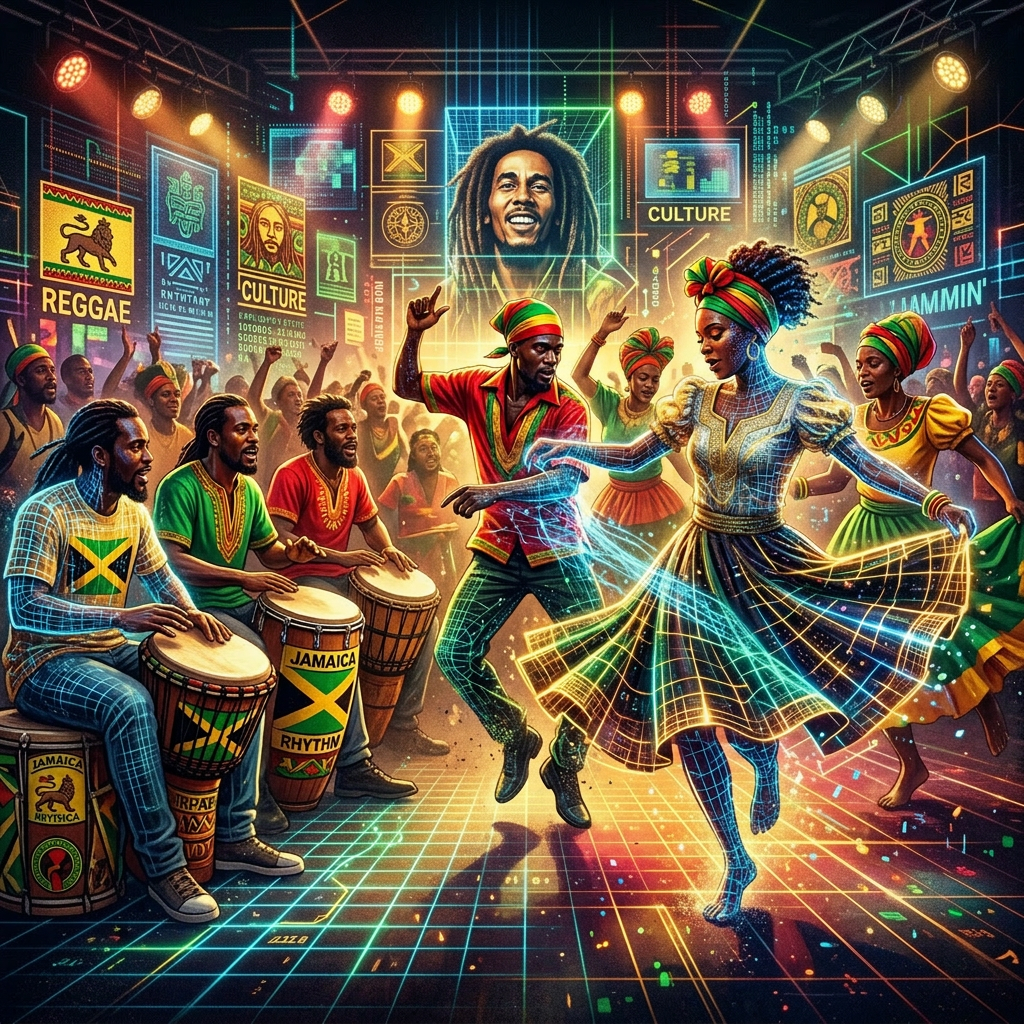
Genres such as reggae, calypso, soca, mento, zouk and kompa emerged from local experiences and carried Caribbean perspectives to global audiences.
Reggae, in particular, helped reshape international perceptions of the Caribbean.
Through artists such as , Caribbean ideas about freedom, spirituality, justice and resistance reached millions of people around the world.
Music gave Caribbean communities a voice.
It also gave the world a new understanding of Caribbean identity.
Literature and Self-Definition
Caribbean writers played a crucial role in documenting experiences often ignored by colonial narratives.
Novelists, poets and playwrights explored themes such as migration, race, memory, independence and belonging.
Writers including demonstrated that local language and cultural experiences were worthy of serious artistic attention.
By placing Caribbean voices at the centre of their work, these artists challenged assumptions about whose stories mattered.
Literature became an act of self-definition.
Theatre and Community Identity
Theatre has long served as a space where Caribbean societies examine themselves.
Through comedy, drama and performance, theatre practitioners have explored social tensions, political realities and cultural values.
Community theatre, in particular, has helped audiences see their own experiences reflected on stage.
Theatre creates a unique form of collective reflection.
Audiences gather together and witness stories that speak directly to their communities.
In doing so, theatre strengthens cultural identity and social connection.
Visual Art and Representation
Caribbean visual artists have also contributed significantly to the evolution of regional identity.
Painters, sculptors, photographers and mixed-media artists have explored themes of ancestry, migration, spirituality and landscape.
Their work challenges stereotypes and expands public understanding of what Caribbean life looks like.
Visual art helps people see themselves represented in ways that are meaningful and authentic.
Representation matters.
The images a society creates often influence how it understands itself.
Independence and Cultural Confidence
The wave of political independence that swept across the Caribbean during the twentieth century also influenced artistic development.
As nations gained greater political autonomy, artists increasingly explored questions of national identity.
What does it mean to be Jamaican?
What does it mean to be Trinidadian?
What does it mean to be Haitian, Barbadian or Dominican?
The arts became a space for these conversations.
Creative expression helped transform political independence into cultural confidence.
Identity in the Digital Age
Today Caribbean identity continues to evolve.
Digital platforms allow artists to reach global audiences while remaining connected to local communities.
Caribbean creators are producing podcasts, films, visual art, music and digital content that reflect contemporary experiences.
Questions of migration, globalisation, technology and cultural preservation continue to shape artistic work.
Identity remains dynamic.
It is constantly being negotiated, challenged and reimagined.
Why the Arts Matter
The arts do more than entertain.
They help societies understand themselves.
They preserve memory, challenge assumptions and create opportunities for dialogue.
Without the arts, many of the conversations that shaped Caribbean identity might never have taken place.
Artists help communities imagine who they are and who they might become.
Conclusion
Caribbean identity did not emerge fully formed.
It developed through centuries of cultural exchange, struggle, creativity and reflection.
The arts have been central to that process.
Through music, literature, theatre, visual art and storytelling, Caribbean people have continuously explored and expressed what it means to belong to this region.
The evolution of Caribbean identity is still ongoing.
And the arts remain one of its most powerful guides.