O'Maro Bekele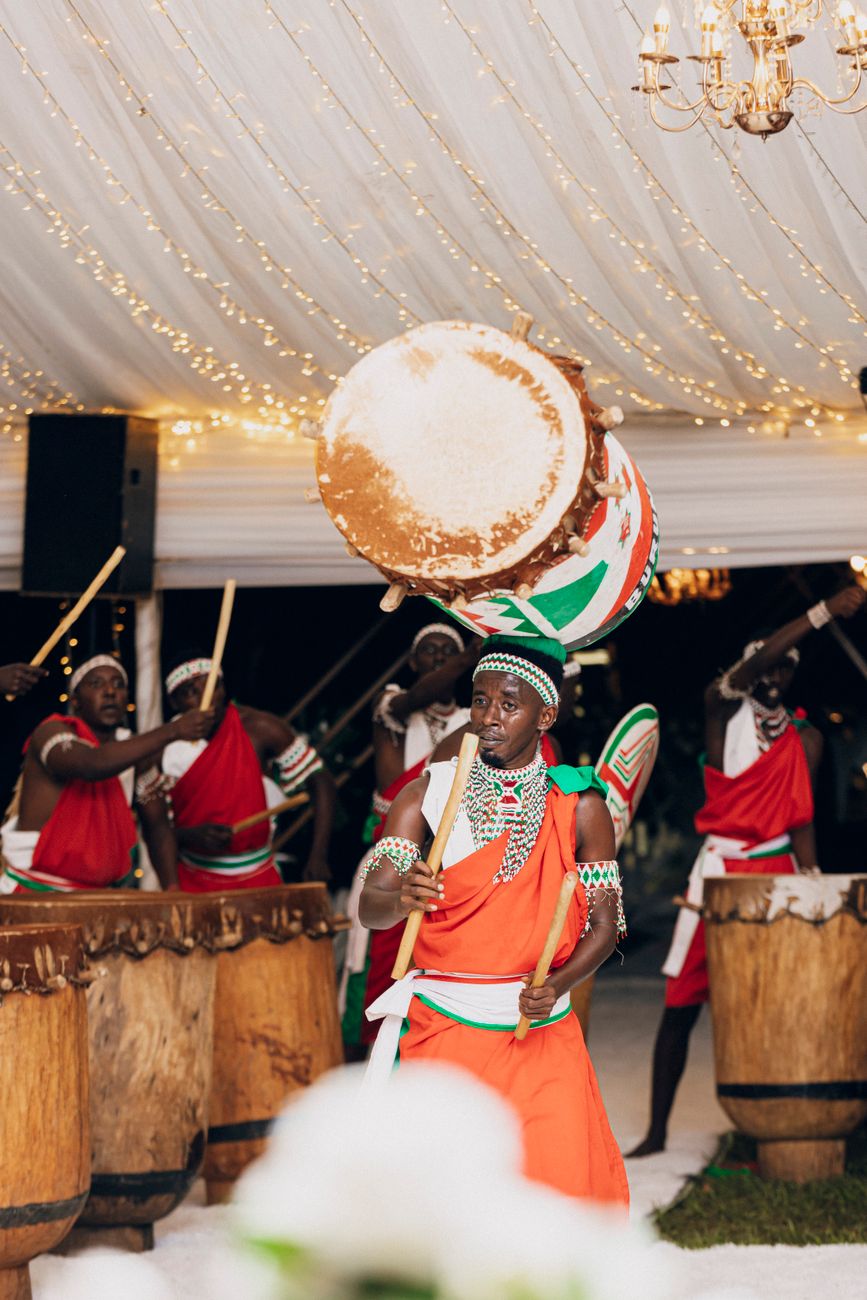
To understand Caribbean art, one must first understand Africa.
Across the Caribbean, the influence of Africa can be seen in music, dance, storytelling, religion, language, visual arts and performance traditions. Though centuries have passed since the transatlantic slave trade forcibly brought millions of Africans to the region, African cultural traditions remain among the most powerful forces shaping Caribbean identity.
Far from disappearing, these traditions adapted, survived and evolved.
Today, African influence is not simply part of Caribbean culture.
It is one of its foundations.
The Journey Across the Atlantic
Between the sixteenth and nineteenth centuries, millions of Africans were transported to the Caribbean through the transatlantic slave trade.
These men, women and children came from diverse ethnic groups and kingdoms across West and Central Africa, bringing with them languages, spiritual systems, artistic practices, musical traditions and cultural knowledge.
Slave owners often attempted to suppress these traditions.
Yet culture proved remarkably resilient.
African customs survived through memory, community and adaptation, often hidden beneath European structures before eventually emerging as distinct Caribbean forms.The result was not a replica of Africa.
It was the creation of something new that still carried African roots.
The Drum as Memory
Perhaps no symbol better represents African influence in Caribbean art than the drum.
Across many African societies, drumming served as communication, celebration, ceremony and spiritual practice. These traditions travelled across the Atlantic and became central to cultural life throughout the Caribbean.
In Jamaica, African drumming traditions can still be heard in Kumina ceremonies, Revival practices, Maroon celebrations and contemporary cultural performances.
The drum remains more than a musical instrument.
It functions as a vessel of memory, carrying rhythms and practices that have survived for generations.
Even modern genres such as reggae, dancehall and Afro-Caribbean fusion continue to reflect rhythmic structures rooted in African traditions.
Dance as Cultural Survival
Movement has always been central to African cultural expression.
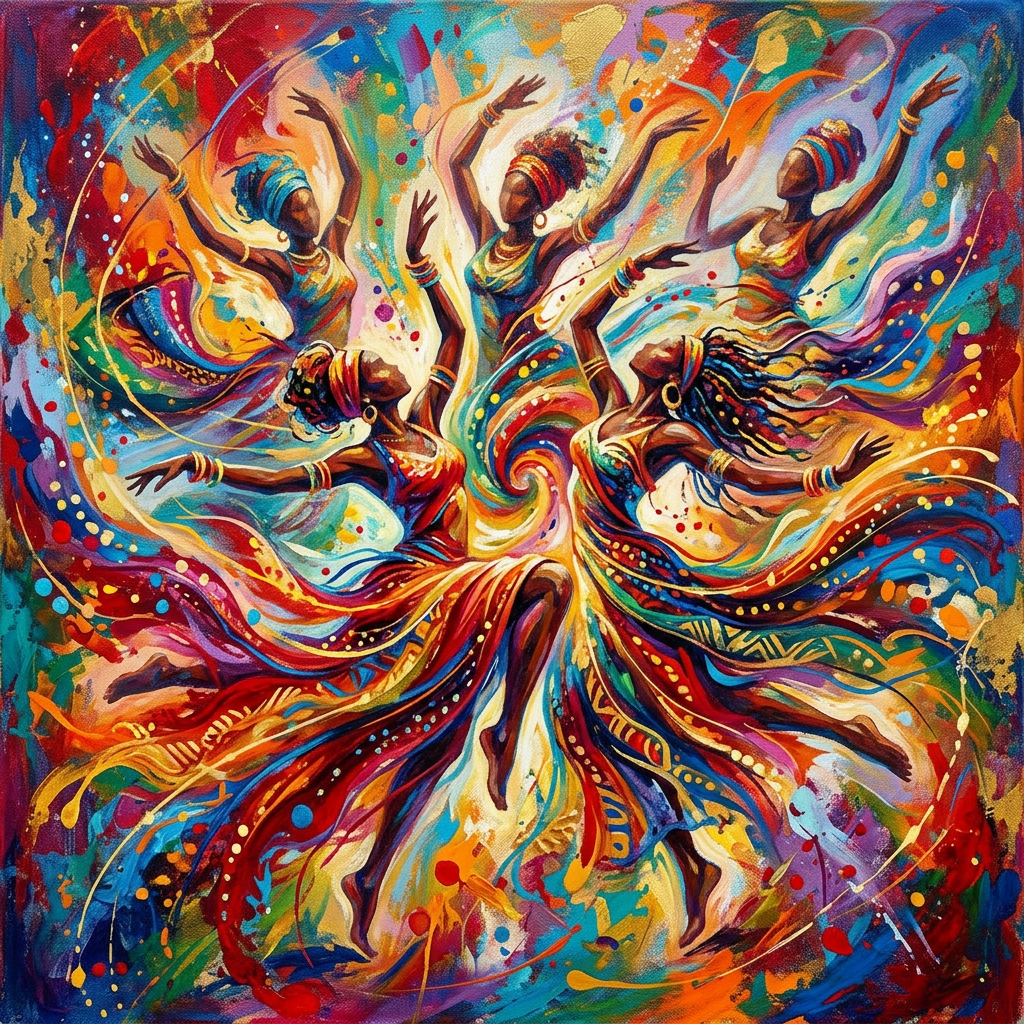
Many Caribbean dance traditions retain characteristics found in African performance forms, including grounded movement, improvisation, call-and-response interaction and strong connections between music and physical expression.
Traditional Jamaican forms such as Kumina and Dinki Mini demonstrate clear African influences.
Contemporary Caribbean dance also continues to draw upon these foundations while incorporating modern techniques and global influences.
The body remains a site of cultural memory.
Storytelling and Oral Tradition
African storytelling traditions continue to shape Caribbean literature and performance.
Anansi stories provide one of the most recognisable examples.
Originating among the Akan people of present-day Ghana, Anansi travelled across the Atlantic and became one of the Caribbean’s most beloved folk characters.
The clever spider survives through wit rather than strength, often overcoming more powerful opponents.
Generations of Caribbean children have encountered moral lessons, humour and cultural values through Anansi stories.
The influence extends beyond folklore.
Many Caribbean writers, poets and performers continue to embrace oral storytelling traditions that reflect African narrative practices.
Spiritual Influences
African spiritual traditions have also left a lasting mark on Caribbean artistic expression.
Practices such as Kumina in Jamaica, Vodou in Haiti, Shango in Trinidad and various Afro-Caribbean religious traditions have influenced music, dance, visual art and performance culture.
These traditions often emphasise rhythm, collective participation, ancestral connection and ceremonial expression.
Many Caribbean artists continue to draw inspiration from these spiritual systems when exploring themes of identity, history and belonging.
Language and Expression
African influence can also be heard in Caribbean speech patterns, vocabulary and forms of expression.
Creole languages throughout the Caribbean emerged through complex interactions between African languages and European colonial languages.
While each territory developed differently, African linguistic influence remains visible in pronunciation, syntax, vocabulary and communication styles.
Language became another means through which cultural knowledge survived.
Contemporary Caribbean Art
Modern Caribbean artists continue to engage with African heritage in new and innovative ways.
Visual artists explore themes of ancestry, migration and identity.
Musicians blend traditional rhythms with contemporary genres.
Filmmakers examine the historical and cultural connections between Africa and the Caribbean.
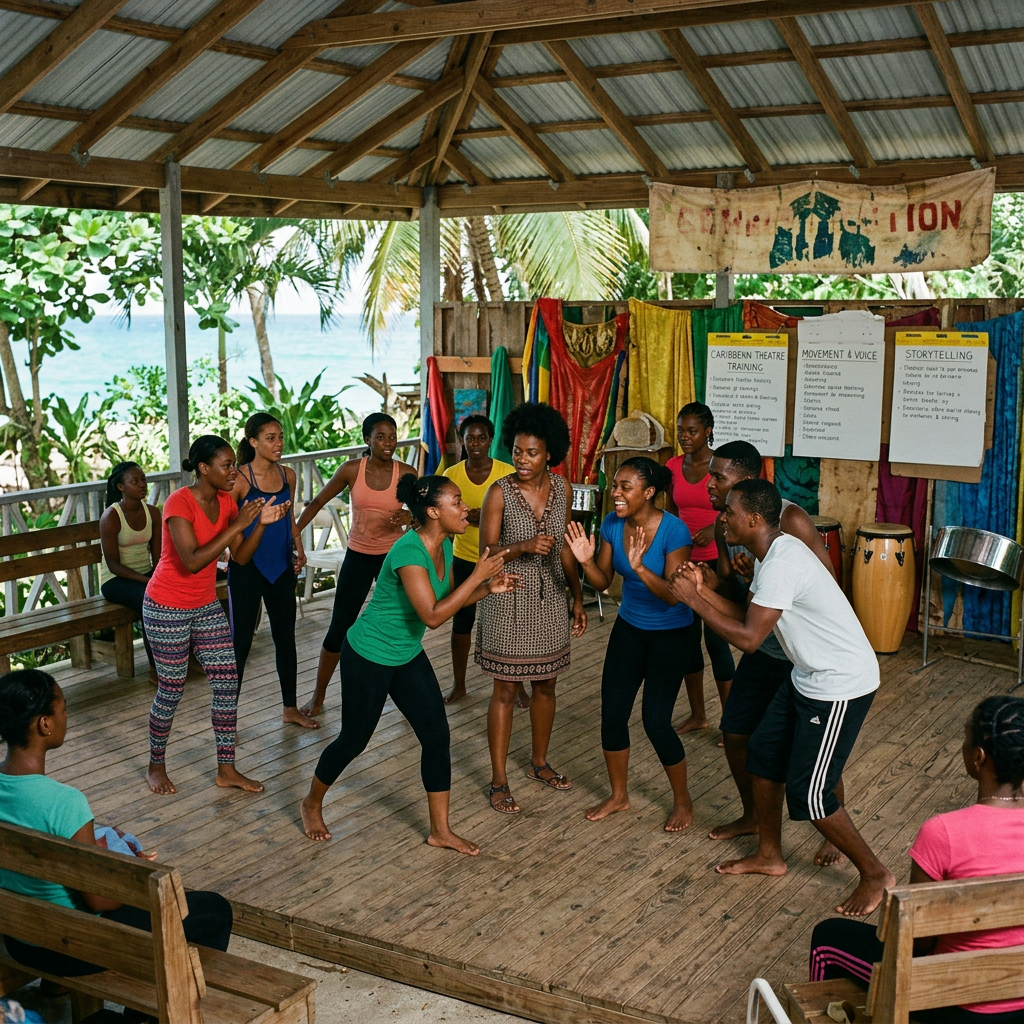
Theatre practitioners draw upon ritual, storytelling and performance traditions rooted in African cultural practices.
Rather than treating African heritage as something confined to the past, many contemporary artists see it as a living source of inspiration.
Why This Matters Today
Understanding African influence helps us understand Caribbean culture itself.
Too often, discussions of Caribbean history focus primarily on colonisation while overlooking the creative contributions of African peoples whose traditions helped shape the region.
Recognising these influences provides a fuller picture of Caribbean identity.
It reminds us that Caribbean culture is not simply a product of survival.
It is also a story of creativity, adaptation and cultural innovation.
African influence continues to shape Caribbean art in profound ways.
It can be heard in the drum, seen in dance, felt in storytelling and recognised in the spiritual and cultural traditions that continue to thrive across the region.
The Caribbean is many things.
But it is impossible to understand Caribbean culture without understanding Africa’s enduring presence within it.
That influence remains alive not only in history books, but in the music, movement, stories and creative expressions that continue to define the region today.
Suggested SEO Title: The African Influences That Still Shape Caribbean Art Today
Meta Description: Discover how African traditions continue to influence Caribbean music, dance, storytelling, spirituality, language and contemporary artistic expression throughout the region.